
Soffits and fascias frame your roofline, so when they are dull, green or cobwebbed, the whole house looks tired, however clean the windows are. They are also the part of a property that gets cleaned least. This guide explains what they are, why they get so dirty, how professional soffit and fascia cleaning works, and how to keep your roofline looking fresh.
What are soffits and fascias?
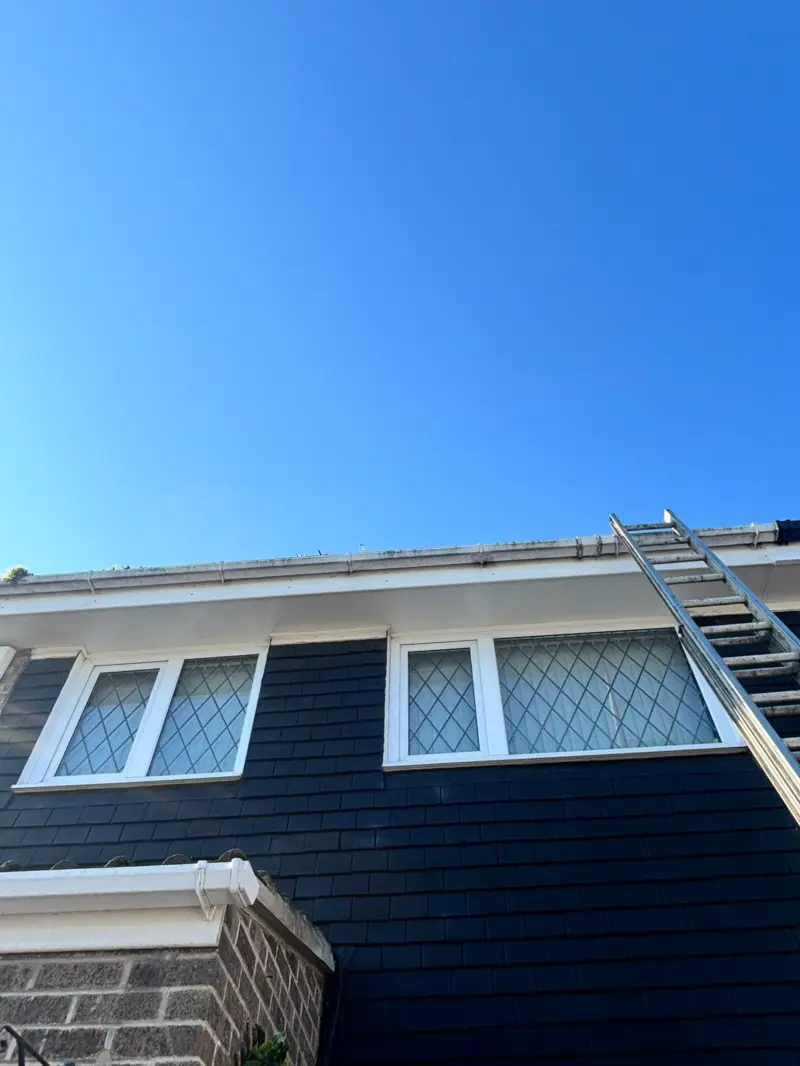
A fascia is the long board that runs along the edge of your roof, directly behind the gutter. A soffit is the board on the underside of the roof overhang, between the wall and the fascia. Together with the bargeboards on gable ends, they cover and protect the roof timbers and give the roofline its finished look.
On many homes they are white or off-white plastic. On older properties they may be timber that has been painted. Either way, they are one of the first things you notice when you look up at a house.
Why soffits and fascias get so dirty
They are exposed all year, and they sit in awkward spots where the rain does not wash them clean. The underside of the soffit stays dry and collects dust, cobwebs and the droppings of insects and birds. The top of the fascia and the gutter fronts catch rain, which dries in streaks and encourages green algae.
Traffic film, pollen and the grime that blows around any built-up area settle on them too. Over time, plastic that was bright white turns grey, green or yellowish, and the whole roofline looks neglected.
Signs your roofline needs cleaning
These are the common signs, and most are easy to see from the ground:
- Green or black algae along the top of the fascia or the gutter front
- Grey, dull or streaked boards that used to be bright white
- Cobwebs, dust and insect nests along the underside of the soffit
- Black spots or speckling, especially under trees and on the shadier side of the house
- Dirty water marks running down from the gutter or the edge of the roof
- A roofline that looks much grubbier than the windows and frames beneath it
How we clean soffits and fascias
We use a water-fed pole with a soft brush and purified water. It reaches the roofline from the ground, so there is no need for scaffolding or for ladders resting against your gutters and boards.
- We look over the roofline with you and agree what is included, such as soffits, fascias, bargeboards and the outside of the guttering
- A soft brush loosens algae, dust, cobwebs and grime from the boards
- Purified water rinses everything clear, so the boards dry without spots or streaks
- We check the finish as we go and let you know about anything we notice, such as cracked boards or damaged gutters
What results to expect
Most roofline staining is surface dirt and algae, and it comes off well, which often gives a dramatic difference. Boards that looked grey and green frequently look bright white again.
The honest limit is the condition of the material itself. Plastic that has yellowed with age, or boards that are cracked, warped or peeling, may not return to their original colour, because the marks are in the material and not on it. We will always tell you what we expect before we start.
If your boards are timber, tell us when you ask for a quote. Painted timber can be cleaned, but it needs a gentler approach and a clear view of its condition.
When cleaning is enough, and when boards need replacing
Cleaning is the right answer when the boards are sound and the problem is surface dirt: algae, cobwebs, grime and the dull grey film that builds up on white plastic. It suits boards that are straight, intact and simply stained.
Replacement is a different job, and not one we offer. Boards that are cracked, warped, bowed or coming away from the wall, plastic that has turned brittle, and timber that is soft, flaking or rotten will not be put right by cleaning. If we see any of those things we will tell you plainly, so you can ask a roofer or builder to look at them rather than cleaning boards that are about to be replaced.
In practice, many roofline refreshes are a mix. A clean often shows which boards are sound and which are not, because a layer of grime hides cracks and gaps that are obvious once the surface is clear.
Terraces, semis, bungalows and new builds
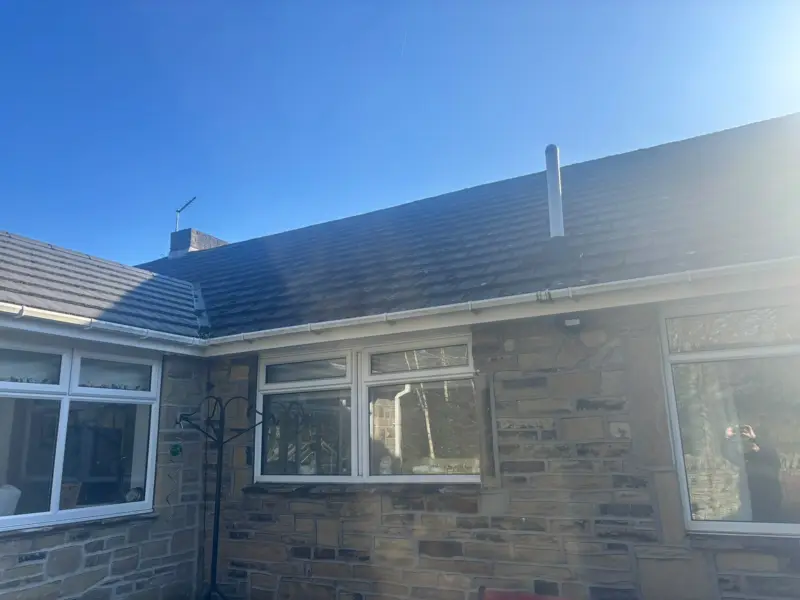
The roofline changes a lot from one house to the next. On a bungalow the soffits and fascias are low enough to reach easily, and they often run in long, uninterrupted lengths. A traditional semi or detached house usually has a mix of low porch and extension rooflines and higher boards above the first floor, with bargeboards on the gable ends. New-build estates tend to have deep soffits with short runs broken up by corners and dormers.
Terraced rows are different again, because the roofline runs through from one house to the next. We agree with you where your boards start and stop, and in a street where neighbours want theirs done as well, it is often easier to arrange the visits together.
What affects the job
A few things influence how long a clean takes and how it turns out:
- The length and layout of the roofline, including extensions, porches and dormers
- How long it has been since the last clean, and how established the algae is
- Trees overhead, which drip sap and keep boards damp
- Terraced or semi-detached houses, where rooflines run on and we need to agree where each property starts and stops
- The type and condition of the boards and gutters
How often should soffits and fascias be cleaned?
Because the dirt builds up slowly, most homes do not need it often. Many customers have the roofline cleaned every year or two, often alongside their gutters and windows. Homes under trees, or on the shadier side of a hill, may want it more often to keep algae in check.
A good time to book is after the autumn leaves have fallen and before winter sets in, or in spring when you want the house looking its best. We are happy to suggest a sensible timetable when we quote.
The best time of year for roofline cleaning
Rooflines can be cleaned all year, but some seasons suit particular problems. Spring suits algae and the grime left by winter, and gets the house ready for the lighter months. Summer is when cobwebs and insect nests peak under the soffits, and the long daylight hours make for comfortable working. Autumn, after the leaves have come down, is a good time to combine the roofline with a gutter clear, so the gutter and the fascia in front of it are done together.
Winter is the hardest time to work on a roofline, because of ice, frost and short days, so we would rather rearrange a visit than rush it. If you are choosing between seasons, late spring and early autumn are the easiest times to get a result that looks good for a long while.
Can you clean them yourself?
Soffits and fascias are the highest part of the house you can easily reach, and cleaning them by hand means working from a ladder, usually while leaning across the gutter. That is difficult and risky, and the ladder can crack plastic boards and guttering.
Household sprays and cloths often leave streaks and do little for algae on the top edge. A pole and pure water do the job from the ground, with no ladder and no film left behind.
Completing the exterior refresh
Roofline cleaning is one of the most visible improvements you can make, and it works best alongside related jobs. Gutter cleaning clears the inside of the gutters directly in front of the fascia. Roof cleaning removes moss from the tiles above, and window cleaning makes sure the glass and frames beneath the roofline look just as good.
We clean soffits and fascias across Sheffield (High Green, Chapeltown, Burncross, Ecclesfield, Grenoside, Wincobank, Stannington, Oughtibridge and Hillsborough), Rotherham (Thorpe Hesley, Kimberworth, Greasbrough, Brinsworth, Wickersley, Scholes and North and South Anston) and Barnsley (Tankersley, Hoyland, Birdwell, Elsecar and Wombwell). Choose your town below to see how we handle roofline cleaning where you live, or send us your address and we will confirm we cover it.
Still reading? There is more.
9 more sections cover:
- How we clean soffits and fascias
- What results to expect
- When cleaning is enough, and when boards need replacing
- Terraces, semis, bungalows and new builds
- What affects the job
- How often should soffits and fascias be cleaned?
- The best time of year for roofline cleaning
- Can you clean them yourself?
- Completing the exterior refresh