
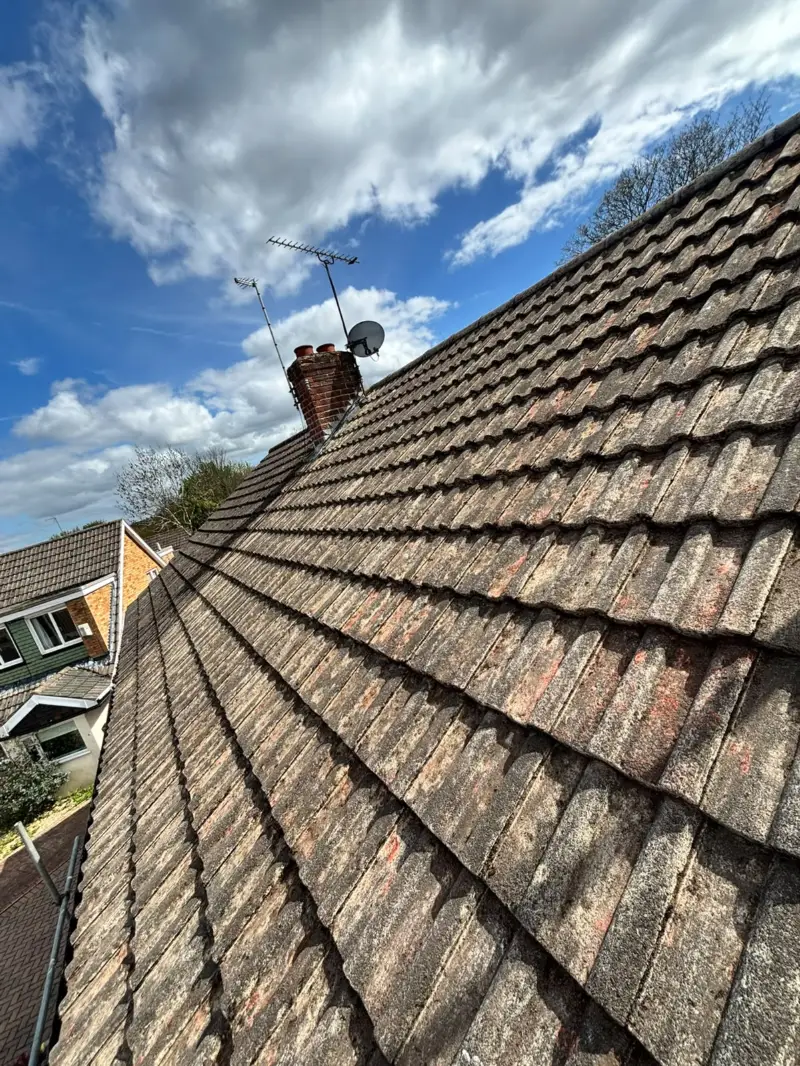
A roof is one of the most expensive parts of any property and one of the least looked at. Moss, lichen and algae build up slowly and quietly, long before they cause visible damage. This guide explains what is growing on your roof, why it matters, how professional roof cleaning works, and how to keep your roof in good condition for longer.
What is actually growing on your roof?
Three things tend to grow on roofs in this part of the country, and they are not the same. Moss is the thick, green and often fluffy growth that gathers along tile edges and the ridge. Lichen forms flat, crusty patches in grey, green, orange or yellow that grip the surface of the tile. Algae is the thin black or green staining that streaks down a roof slope and makes it look dirty rather than overgrown.
They thrive for the same reasons. Roofs that stay damp and shaded, such as north-facing slopes, roofs under trees and slopes that rarely get direct sun, give them what they need. South Yorkshire's mix of hillside streets, mature trees and plenty of rain means many roofs have at least some growth.
Why moss and lichen are worth dealing with
Moss is not just cosmetic. It acts like a sponge, holding water against the tiles long after the rain has stopped. Through winter that trapped water can freeze, and repeated freezing and thawing puts extra stress on tiles. Thick moss can also work its way under tile edges and lift them slightly, and the debris it sheds ends up in your gutters.
Lichen is slower and gentler, but it grips the surface of the tile and makes a roof look old and neglected well before its time. Algae streaks do the same.
Cleaning a roof does not repair damage that is already there. What it does is remove the growth that holds moisture against your tiles, so the roof can shed water properly and dry out between showers. It also makes the whole property look cared for, which matters if you are thinking of selling.
Signs your roof needs cleaning
You can usually see the signs from the ground, and a pair of binoculars helps. Look out for:
- Green or black patches spreading across one or more slopes, most often on the shadier side
- Thick moss gathered along the bottom edge of tiles, around the chimney and along the ridge
- Grey, orange or yellow crusty patches on the tile surface
- Black streaks running down the roof, below the ridge line
- Moss and small pieces of debris collecting in your gutters or on the ground below the roof edge
- A roof that looks noticeably older and darker than the rest of the property
How we clean a roof: scrape, clear and treat
We use a two-stage method that deals with the growth you can see and then treats what is left behind. It is hands-on, careful work that is gentle on your tiles.
- We look over the roof and agree with you what needs doing before any work starts
- Moss and lichen are scraped away carefully by hand, working across the roof so tiles are not stressed or displaced
- The loosened growth is cleared from the roof, the gutters and the ground below, so you are not left with a mess
- A biocide treatment is then applied across the roof to deal with the spores and growth that remain
- We tidy up and let you know about anything we noticed, such as cracked or slipped tiles, so you can decide what to do about it
What the biocide does, and what to expect afterwards
Biocide is a treatment applied to the roof that works on moss, lichen and algae that are still growing. It does not work instantly. Over the weeks that follow, the treated growth dies back, and rain gradually washes it away. Most customers see the roof lighten steadily rather than all at once.
How quickly that happens depends on the weather, the type of tile and how established the growth was. A dry spell after treatment helps. Heavily shaded slopes can take longer to clear.
It is normal to see some darker or patchy areas straight after the visit, because the treatment is still doing its work. If you have questions about how your roof is changing, send us a message and we will explain what you are seeing.
What affects how your roof turns out
No two roofs are the same, and a few factors make a real difference to the job and the result:
- The type of tile. Concrete, clay and slate roofs each age and grow moss differently
- The age and condition of the roof. Cleaning removes growth, but it cannot repair cracked, porous or worn tiles
- How established the growth is. Years of thick moss take more effort to remove than a light covering
- Shade and trees. Overhanging branches keep roofs damp and drop leaves and debris onto them
- Access. Steep pitches, extensions, dormers and tight spaces all affect how we work safely
Chimneys, ridges, valleys and extensions
The main slopes are only part of a roof. Moss loves the details: the tiles and mortar along the ridge, the valleys where two slopes meet and water runs together, the base of a chimney stack where water collects, and the lower edge of every slope where it meets the gutter. These spots stay wet longest, so they often carry the thickest growth even when the open slopes look fairly clear.
Extensions, porches, garage roofs and dormers are worth mentioning when you ask for a quote. Lower roofs are often shaded by the main house, fences and trees, so moss can establish quickly on them, and shallow roofs hold water for longer. Tell us about every roof on the property and we will agree which ones are suitable and how each will be reached.
How often should a roof be cleaned?
There is no fixed timetable, because it depends on the roof and its surroundings. Heavily shaded or north-facing roofs under trees tend to regrow sooner. Roofs in open, sunny positions can stay clear for much longer.
Rather than guess, the best approach is to keep an eye on the roof from the ground each year, ideally after winter, and book a visit when moss starts to build up again. Dealing with it early is quicker and gentler on the tiles than waiting until moss is thick and heavy.
Many customers choose to have their gutters cleared at the same time, because the debris from a roof clean ends up there. We can arrange both in one visit.
Keeping your roof cleaner for longer
There are a few simple things that slow regrowth. Cut back overhanging branches so more sunlight and wind reaches the roof. Keep gutters and valleys clear so water does not pool at the roof edge. Clear leaves from flat roofs, porches and extension roofs where they gather.
Roof cleaning pairs naturally with other exterior work. Gutter cleaning clears the moss and debris that comes off a roof. Soffit and fascia cleaning refreshes the roofline underneath it, and window cleaning finishes the job so the whole property looks its best.
If you have solar panels on the roof, our solar panel cleaning keeps them clear of the dirt and bird mess that collects on them.
Roof cleaning across Sheffield, Barnsley and Rotherham
Roofs here work hard. Hillside streets in Sheffield catch driving rain. The older terraces and stone-built villages around Barnsley have shaded north slopes that stay damp. The large estates around Rotherham have tiled roofs that have been quietly collecting moss for decades.
We clean roofs across Sheffield (High Green, Chapeltown, Burncross, Ecclesfield, Grenoside, Wincobank, Stannington, Oughtibridge and Hillsborough), Rotherham (Thorpe Hesley, Kimberworth, Greasbrough, Brinsworth, Wickersley, Scholes and North and South Anston) and Barnsley (Tankersley, Hoyland, Birdwell, Elsecar and Wombwell). Choose your town below to see how we handle roof cleaning where you live, or send us your address and we will confirm we cover it.
Still reading? There is more.
7 more sections cover:
- How we clean a roof: scrape, clear and treat
- What the biocide does, and what to expect afterwards
- What affects how your roof turns out
- Chimneys, ridges, valleys and extensions
- How often should a roof be cleaned?
- Keeping your roof cleaner for longer
- Roof cleaning across Sheffield, Barnsley and Rotherham