
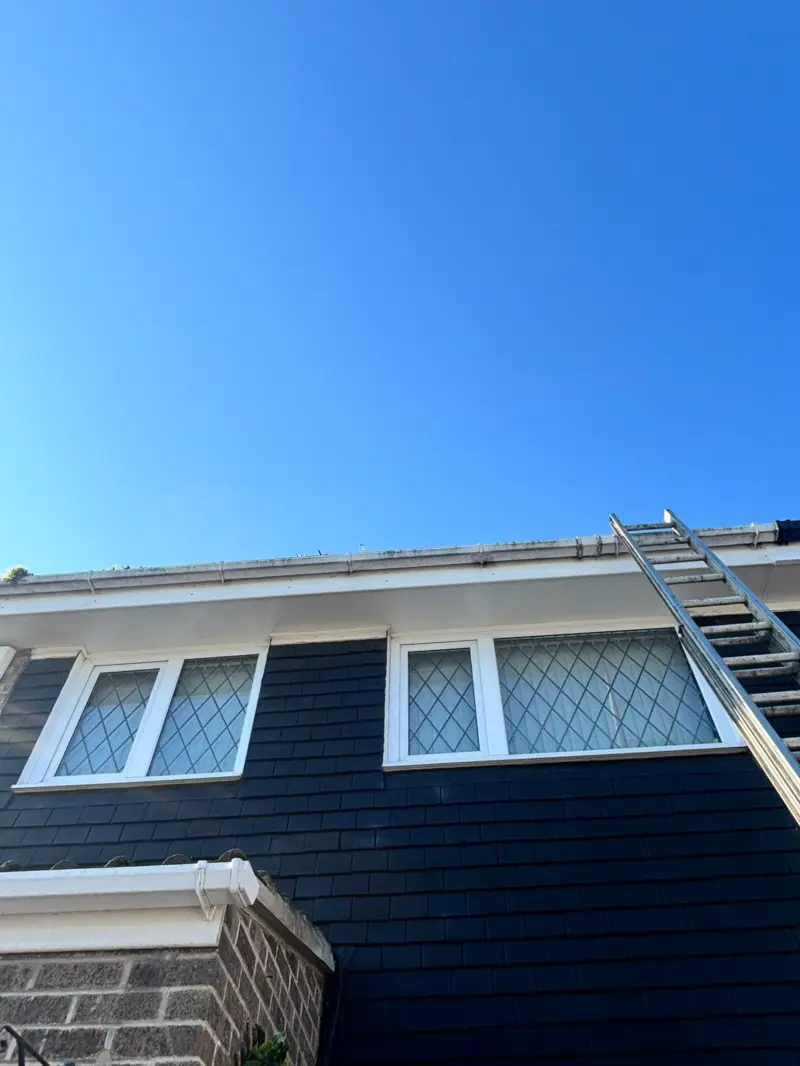
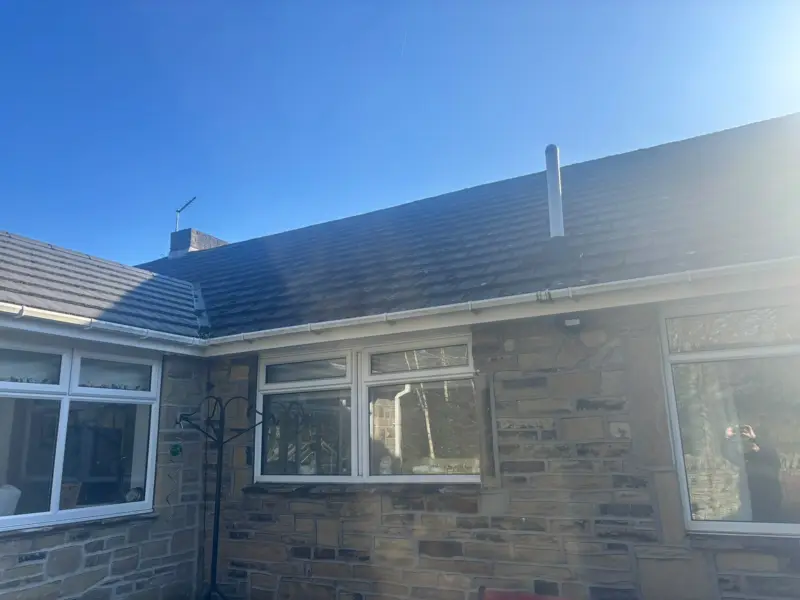
Nobody washes a roofline, which is exactly why it looks the way it does. The long terraces, regular estates and rows of cottages in this corner of the borough make the problem easy to see, because the same boards repeat down an entire street and one clean frontage shows up the rest. Plastic and painted timber stay outside in every kind of weather, year after year. What follows describes what that does to them in Tankersley, Hoyland, Birdwell, Elsecar and Wombwell, what cleaning achieves, and when it is worth booking.
What the boards are up against
A fascia faces the weather from above and the front. Rainwater slides down it and dries in lines, the gutter fixed to it stays wet, and moisture lingers along the top edge where algae finds an easy home. Beneath the overhang, the soffit is dry but sheltered, which suits dust, spiders and the small insects that nest in the corners.
This part of South Yorkshire adds a few ingredients of its own. The air off the Pennine foothills is cool and damp, which slows drying. Wind drags grit and field dust across open ground and presses it against whatever stands in the way. Trees in gardens and on former colliery land cast shade and drip sap, and the combination turns bright plastic dull, then green around the edges.
Rooflines across Barnsley streets
Colliery terraces in Hoyland and Wombwell give long, straight lengths of board shared by a whole row. The estates that followed have semis with gabled or hipped roofs, each with boards on several sides, and bungalows have low boards within easy reach. Extensions, porches and garages add shorter runs at awkward heights. Georgian houses and the older cottages of Elsecar and Tankersley often differ again, with timber boards, stone eaves or hardly any board at all.
The shape of the house sets the plan. On a terrace, the first job is deciding which stretch is yours. A hipped roof simply means more length. Bungalows are quick, a stone eaves needs only its gutter fronts, and painted timber calls for a lighter touch, after checking the state of the paint.
Rooflines in Tankersley and Birdwell
Tankersley's older stone houses near St Peter's may have painted timber or stone eaves, while its newer homes carry plain plastic boards. With fields on every side, the wind pushes dust and pollen against the fascias, and the side facing the weather greys first. Boards on houses nearest the motorway pick up a sooty film that brushes off readily.
Birdwell's terraces and semis line the A61 with their front boards facing the traffic, and a grey road film is the main job there. The estates behind the main road are quieter, with trees from the small woods nearby dripping onto boards and filling soffit corners with webs by late summer. Low bungalow boards are quick to do from the drive.
Rooflines in Hoyland
Hoyland spreads along a hill spur, and its rooflines take whatever the wind sends. In the older centre around Market Street and West Street, terraces run shoulder to shoulder with fascias close to the pavement, while Hoyland Common and Platts Common are laid out in repeating lines of semis. Plastic boards fitted in the last few decades have often faded to grey or green, and in a long, regular row the change is obvious.
Wind-driven grit coats exposed boards, and boards under garden trees pick up sap and webs. Newer houses on the edge of town have deep plastic soffits and wide fascias that clean up well. Open plots mean the pole can be set up anywhere along the wall, so a run of identical houses is completed quickly and evenly.
Elsecar and its cottage rooflines
Elsecar was planned in the 1790s for the ironworks and colliery workforce, and its low rows of cottages still face the village green. Boards, where they exist, may be timber painted over the decades, and a good share of the village is listed or in the conservation area. The principle for cleaning there is simple: change nothing, remove only the dirt.
Valley damp and the trees along the canal and in the park keep boards green, and cobwebs gather under eaves low enough to see from the path. If your home is listed, say so in your first message. We look at the boards and the paint, agree what is included, and tell you frankly if a board looks too fragile to brush.
Rooflines in Wombwell
Wombwell mixes long terraces near the High Street, big post-war estates and newer developments, so every generation of roofline can be found within a few streets. Terraces share a single line of board along the row, the estate semis have boards on three or four sides, and newer homes have wide uPVC fascias and vented soffits that brighten up well once the algae has gone.
Being in the Dearne valley, Wombwell's boards stay damp for longer, and the north-facing side of a house turns green well before the rest. Homes on the busier roads collect a grey road film on their front fascias. On terraced streets we work from the footway, keeping the pole clear of doorways and parked cars.
What happens on the day
The pole is fed with purified water and fitted with a soft brush. Working board by board, the brush shifts algae, webs and grime, and a rinse follows immediately so that the dirt leaves with the water and the surface dries mark-free. No harsh chemicals and no scaffolding are involved, and the pole rests on the ground, not on your gutters.
Before we start we agree what is in scope: soffits, fascias, bargeboards and the outer face of the guttering, whichever you want. While we work we note cracked boards, open joints and sagging runs, and report them at the end. On painted timber, the paint is checked first and the brushing kept light.
What cleaning will not change
Dirt on the surface is what a clean transforms. Ageing is another matter: plastic that has chalked or turned yellow in the sun, boards that have cracked or bowed, and timber that is rotten beneath its paint will look better when they are clean, but not new. Better to know that before the visit than to be disappointed after it.
A cleaned roofline also reveals the truth about the boards. Grime hides hairline cracks and small gaps, so a roofline that has been washed lets a builder judge in a glance which boards are sound and which need attention, and saves guesswork.
Gutter fronts, brackets and gable ends
The gutter hangs from the fascia, so its outer face and brackets are part of the same picture. Dirty fronts spoil a clean board, and a streak of algae running along a gutter is often the first thing the eye catches. We brush the outer face and the fittings as we go, so the whole edge of the roof looks consistent.
Bargeboards on gable ends are a separate line of board at the side of the roof, easily forgotten because they are not above a gutter. They gather the same dirt and are cleaned in the same visit. The inside of the gutter is different, and is dealt with by our gutter vacuum, which is simple to book alongside.
Listed homes and the conservation area
Some of the older housing we look after, especially in Elsecar, carries some form of protection. Cleaning removes dirt and leaves the fabric as it was, and our methods are gentle, but we still want to know about protection before we begin. If the house is listed or sits in the conservation area, let us know, and we will examine the boards and agree what is sensible.
Questions about consent for alterations are for the council. Our work is not an alteration, but if you are unsure, a quick call to the council is easier than a wasted visit.
Timing a roofline clean in Barnsley
Spring is when winter's green edge and grey grime are most obvious, and lighter evenings flatter a clean roofline. Summer is cobweb season, with long days for comfortable work. October and November are handy for a joint visit with the gutters, after the leaves have gone. Winter frost and ice rule out work on a roofline, so we wait.
A visit every year or two is usual. Boards under trees, on a shaded slope or in the damp valley at Elsecar or Wombwell may want one sooner, and we suggest a pattern when we have seen the house.
Roofline problems in Barnsley
From Tankersley to Wombwell the jobs usually involve some of these:
- A green stripe riding the upper edge of the fascia
- Boards that have dulled from white to a tired grey
- Cobwebs and nests tucked under the soffit
- Black speckling and sap beneath overhanging branches
- Road grime on boards facing the A61 and other busy streets
- Run marks below a gutter that has overflowed
Rooflines with other work
A roofline sits best above a clear gutter, so many customers book gutter cleaning in Barnsley for the same day. Roof cleaning deals with the moss above the boards, and window cleaning keeps the glass beneath in step.
We clean rooflines in Sheffield and Rotherham too, and the range here is gathered under exterior cleaning in Barnsley.
Still reading? There is more.
10 more sections cover:
- Rooflines in Hoyland
- Elsecar and its cottage rooflines
- Rooflines in Wombwell
- What happens on the day
- What cleaning will not change
- Gutter fronts, brackets and gable ends
- Listed homes and the conservation area
- Timing a roofline clean in Barnsley
- Roofline problems in Barnsley
- Rooflines with other work