
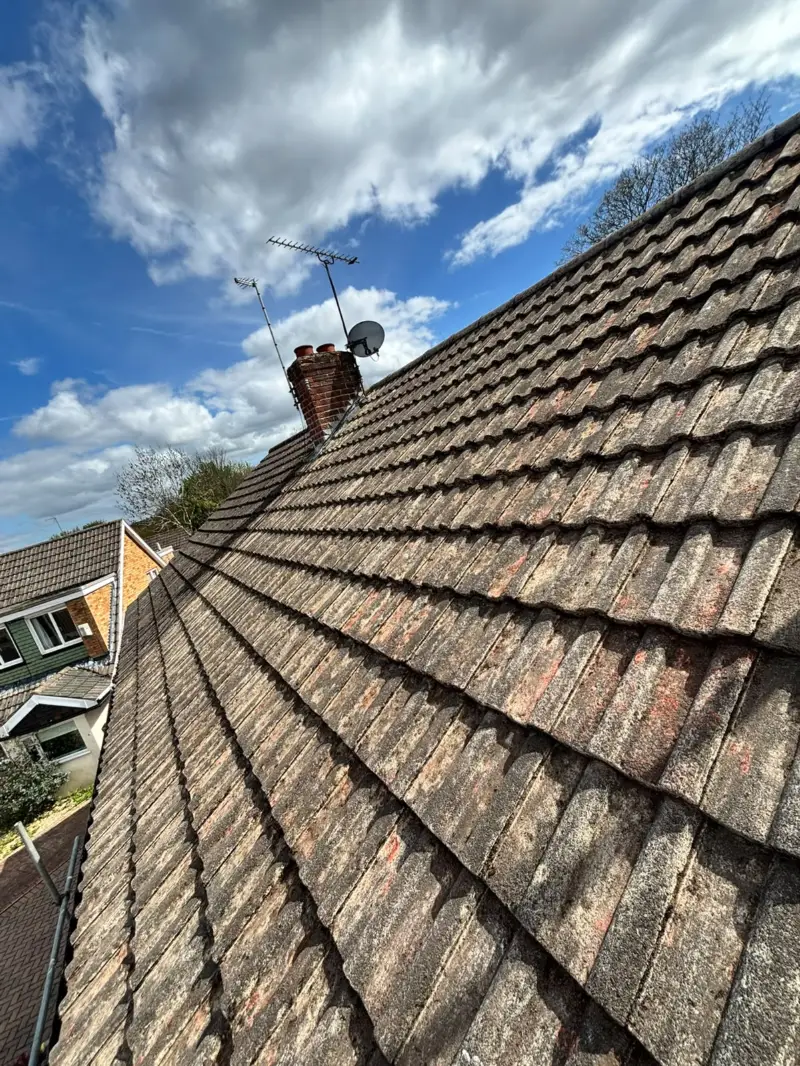
A roof in north Sheffield works harder than most. It faces weather rolling in off the Pennines, it often sits among trees, and on the city's hillsides it may be a north-facing slope that the sun barely touches in winter. Growth that takes years to appear on a sunny, open roof can settle within a few seasons on a terrace in Hillsborough or a cottage in the valley at Oughtibridge. This guide explains what grows on roofs across the nine places we cover here, from High Green to Wincobank, why the local landscape matters, how we clean roofs, and how to judge when your own roof is due.
Why Sheffield roofs hold on to moss
Moss needs three things: moisture, shade and a surface to grip. Sheffield supplies all three. The city sits against the Pennines, its steep sides throw long shadows across the valleys in the colder months, and a large share of its land is wooded or planted with trees. A roof that is overlooked by a hillside, a row of mature trees or a neighbour's high gable can stay damp for days after rain.
Orientation matters as much as altitude. A slope facing north or north-east dries slowly, so it typically grows moss first and most thickly, while the south-facing side of the same roof may stay almost clear. Lichen, which forms flat crusty patches, appears more often on exposed roofs where the air is clean and the tile is old, and algae shows as dark streaks below the ridge. Many Sheffield roofs carry all three at once, in different places.
The roofs we work on: slate, tile and stone
Rooflines here tell the story of when each street was built. The Victorian terraces of Hillsborough are often roofed in slate. The cottages of the Flower Estate in Wincobank have the steeper, plainer roofs of an early garden suburb. The 20th-century estates of High Green, Chapeltown and Burncross are largely tiled, in long, regular pitches that are easy to read from the street. Older villages such as Ecclesfield, Grenoside and Oughtibridge have stone-built cottages, some with stone slate roofs that are heavier and more fragile than modern tile.
The material decides how we work. Concrete and clay tiles are robust and take scraping well. Slate is hard but brittle underfoot, so we move carefully. Old stone slate can be delicate, and if we think a roof is too fragile to scrape safely, we will tell you before any work starts and talk through the alternatives, rather than put it at risk.
Roofs in High Green, Chapeltown and Burncross
The northern edge of the city was built up quickly through the 20th century, and its roofs repeat a handful of designs street after street: hipped and gabled concrete tile on the semis, low pitches on the bungalows, and a lean-to or flat roof on almost every extension. Because the pitches are plain, the roofs are easy to read from the pavement, and a semi that is green on its north slope usually tells you the rest of the row is the same.
High Green is the most exposed of the three, high and open towards Westwood Country Park, where spores travel freely on the wind and lichen likes the clean air. Chapeltown sits lower, and its older terraces near the centre hold damp around chimneys and party walls. In Burncross the issue is shade: mature gardens and trees on the rising ground leave one side of many roofs in shadow for most of the winter, and that is where the moss is thickest.
Roofs in Ecclesfield and Grenoside
The old cores of Ecclesfield and Grenoside have stone cottages and chapels, some roofed in stone slate, set among mature gardens and trees. Those roofs are valuable, so the approach is cautious: look first, agree what is sensible and treat what is safe to treat. Around them, the later housing of both villages brings concrete and clay tiles and, with them, the usual pattern of moss on the shaded slopes.
Grenoside stands high on the edge of Greno Woods, and roofs closest to the trees take leaf litter, seed and pine needles into their valleys and behind their chimneys, holding moisture against the tiles. Ecclesfield is lower and more built up, but the churchyard trees around St Mary's and the big gardens of the older houses do the same job on a smaller scale. A roof beside a wood rarely gets the chance to dry, and it is the first thing we look at when a customer here mentions overflowing gutters.
Roofs in Wincobank and the Flower Estate
Wincobank's hill rises steeply above the Don valley, and the Flower Estate on its slopes was built as a garden suburb of council cottages between the early 1900s and the 1920s. Its roofs are older than most estate roofs in the city, many of them now re-covered, and they sit in short terraces and pairs with chimney stacks still in place. Valleys between the roof slopes and the joints around stacks are where growth gathers first.
The top of the hill is crowned by the trees of Wincobank Wood, and homes on the higher streets live with leaf fall and shade from it. Lower down, roofs face out across the valley and take the full weather. That mix means a single street can have one side green and the other side clear, so we look at each roof on its own merits before agreeing what to treat.
Roofs in Hillsborough, Stannington and Oughtibridge
Hillsborough's terraces present long, unbroken roofs, many in slate, running down the hillside street after street. They are close together, shaded by the houses opposite and often at an angle that leaves the lower slope in permanent shadow. Chimney stacks, party walls and the junctions between roofs hold moisture, and because terraces share their rooflines, we agree with you which part of a roof is yours before any work begins.
Stannington is the opposite problem: high on its ridge between the Rivelin and Loxley valleys, its older stone homes and 1960s estates take the full force of the wind. Roofs there stay clear of some growth but pick up lichen and debris. Oughtibridge is a river village hemmed in by Beeley Wood on one side and Wharncliffe Woods on the other, and in its damp air roofs rarely dry out fully in winter. Old stone cottages there and newer homes on former mill land sit side by side, so roofs of very different ages share the same street.
How we clean roofs across Sheffield
We start by agreeing what is included, then work in two stages. First we scrape the moss and lichen off by hand, a section at a time, taking care not to lever or crack a tile, and sweep the debris out of the roof, the gutters and the garden below. Then a biocide is applied across the surface to deal with spores and the growth that is left. Hand work is slower than other approaches, but it lets us see every tile.
Sheffield's steep streets shape the day. On sloping ground, ladder positions and safe access are worked out first, and on terraces we pay attention to the pavement below. We protect plants and cars where we can and clear up afterwards. A pitch that is too steep or too fragile for a safe scrape is one we decline, and we say so at the quote stage.
A year on a Sheffield roof
Moss grows hardest through the damp months, from autumn to spring, and slows in the drier weeks of summer. That makes late spring and early summer a good time to clean: the roof has the whole growing season ahead to dry out and the biocide gets weeks of settled weather to work. Autumn is the other sensible window, because it clears debris before the wet months, although leaf fall will have to be dealt with at the same time.
After treatment, expect gradual change rather than an instant result. Over the following weeks, the treated moss dies back and rain washes it off, and the roof lightens. On a shaded valley roof in Oughtibridge, this can take longer than on an open one in High Green. Checking the roof from the ground each spring, ideally with binoculars, tells you when it is due.
Common roof problems we see in Sheffield
These turn up from High Green to Hillsborough, in different proportions from one village to the next:
- Thick moss along the bottom courses of north-facing slopes, where water sits longest
- Moss packed into valleys, behind chimneys and along party walls on terraces
- Lichen forming crusty grey or orange patches on older tile and stone slate
- Dark algae streaks on estate roofs below the ridge
- Moss and leaf litter shed into gutters, causing overflow down the wall
- Slipped, cracked or porous tiles that cleaning reveals but cannot repair
Roof cleaning alongside other jobs in Sheffield
The moss that comes off a roof ends up in the gutters, so most roof visits are paired with gutter cleaning in Sheffield, which draws it out with a vacuum from the ground. Soffit and fascia cleaning then refreshes the boards at the roof edge, and if panels sit on the roof, solar panel cleaning clears the array and the moss around it.
Across the rest of our area we offer roof cleaning in Rotherham and roof cleaning in Barnsley, and you can see all seven services on the page for exterior cleaning in Sheffield.
Still reading? There is more.
7 more sections cover: