
Glass tells a visitor how a business is run before anyone speaks. South of Barnsley, that glass sits in an unusual mix of settings: the shopping streets of former mining towns, civic buildings from several centuries, an estate village now keeping its heritage on show and modern units beside the M1. Each has its own demands. A listed frontage cannot be treated like a retail unit, and a school needs different timing from an office. The sections below set out how we plan and carry out commercial window cleaning in Tankersley, Hoyland, Birdwell, Elsecar and Wombwell, from the first survey to the standing schedule.
The setting: hill-spur streets and mining-era buildings
Hoyland, on its hill spur, is exposed to wind and rain from the south-west, and the grit that blows across the open land settles on any glass that faces the weather. Shopfronts at street level take traffic film as well, and frontages in older streets can sit on pavements that slope or narrow. Valley sites in Elsecar and Wombwell add damp air, which turns frames and sills green, and premises near the M1 and the A61 collect a heavier road film than most.
The built fabric is varied. Brick, sandstone and slate stand side by side, and some glazing has been replaced several times in the same opening. We survey each building as it is: what the glass is, how it is held and what is around it, before proposing a method.
Business premises in Tankersley and Birdwell
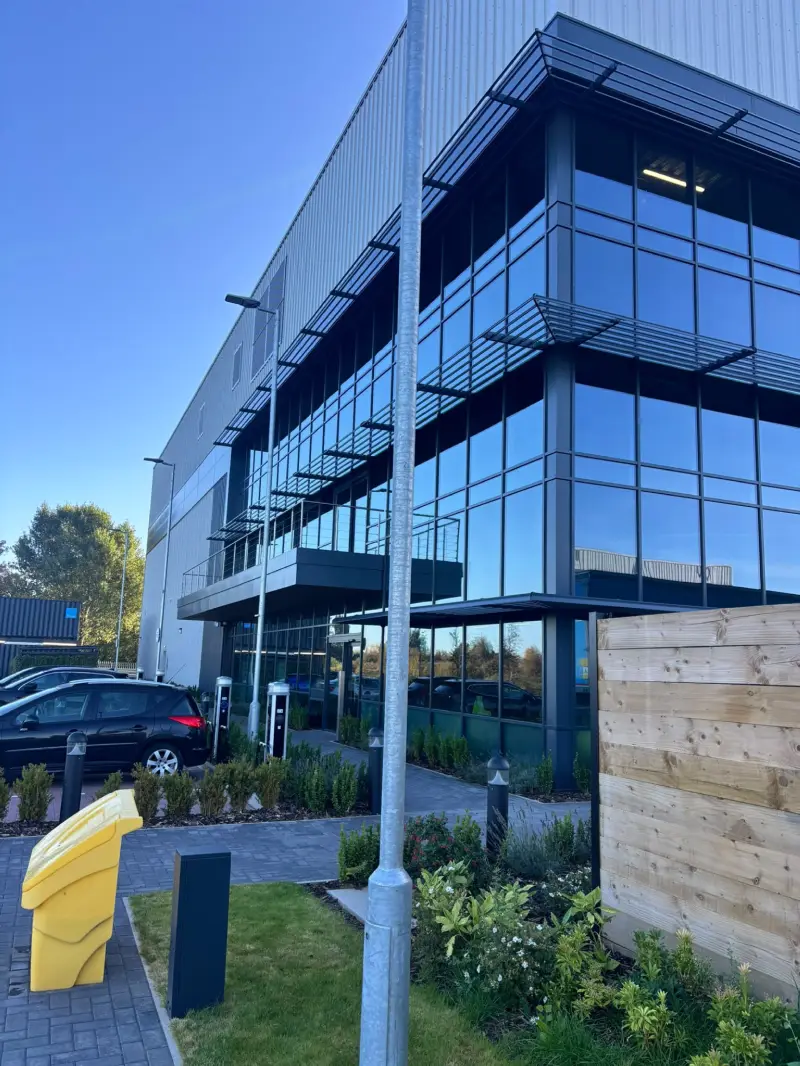
Tankersley sits beside junction 36 of the M1, and its parish takes in the Wentworth Park industrial estate to the west. Business premises there are typically modern: reception areas with full-height glazing, ribbon windows along office floors and roller-shuttered units with a glazed front office. Lorries and vans move all day, so we fix a working window with site management and keep the van and pole out of yards and turning areas. The village itself has a church, a school and a small number of other non-residential buildings.
Birdwell's shops, pubs and services line the A61 Sheffield Road, close to the roundabout where the Dearne Valley Parkway begins. Frontages face a constant flow of traffic, so road film and kerb spray are the dominant soiling, and a shorter cycle keeps them presentable. We position equipment on the footway, clear of entrances and bus stops.
Shops, civic buildings and offices in Hoyland
The older centre of Hoyland is organised around Market Street and West Street, with shops, offices and public buildings in rows of varying age. The town hall, whose upper floors have been converted to apartments, and churches in sandstone and brick sit alongside local retail. Further out, Hoyland Common and Platts Common have their own parades and community premises.
Glazing here ranges from large modern shopfronts to small-paned sash and casement windows in older buildings, often within a few doors of one another. We plan pole and hand work building by building, keep pedestrians clear of wet pavements and agree access in advance for any building where doors open straight onto the street.
Heritage and visitor premises in Elsecar
Elsecar is a heritage destination as well as a village. Former ironworks and colliery workshops house a heritage centre, craft and retail units and cafes, while the park, canal and engine draw visitors through the year. A good share of its buildings are listed or lie in a conservation area.
Visitor-facing glazing carries a high standard, and the approach is gentle by design: purified water and soft brushes that alter nothing, positions that avoid fixed features and visit times that miss the busiest hours. We want to know about listings, access restrictions and any seasonal opening pattern at the survey, so the schedule fits the site.
High street, surgeries and schools in Wombwell
Wombwell is the largest centre we serve around Barnsley, with a High Street of shops, cafes and services near the Old Town Hall of 1897, a railway station, surgeries, schools and churches, and larger retail and leisure premises nearby at Cortonwood. Street-level glazing on the High Street and the roads into town takes traffic film and splash, and entrances see constant use.
Premises range from traditional shopfronts in older buildings to modern single-storey units with large plate glass. The Dearne valley air keeps frames damp, so sills and corners need regular attention. Visits are timed before opening or in quiet periods, with pedestrian routes kept clear throughout.
Survey and specification
A contract begins with a survey, either on site or from the details and photographs you supply. The questions are practical, and the answers drive the specification:
- How much glazing there is, on which faces and at what level
- The frame type and how each pane is fixed
- How we get to each area, and anything that limits it
- Whether the building is listed or sits in a conservation area
- When the premises are busiest, and what must not be disturbed
Methods for different buildings
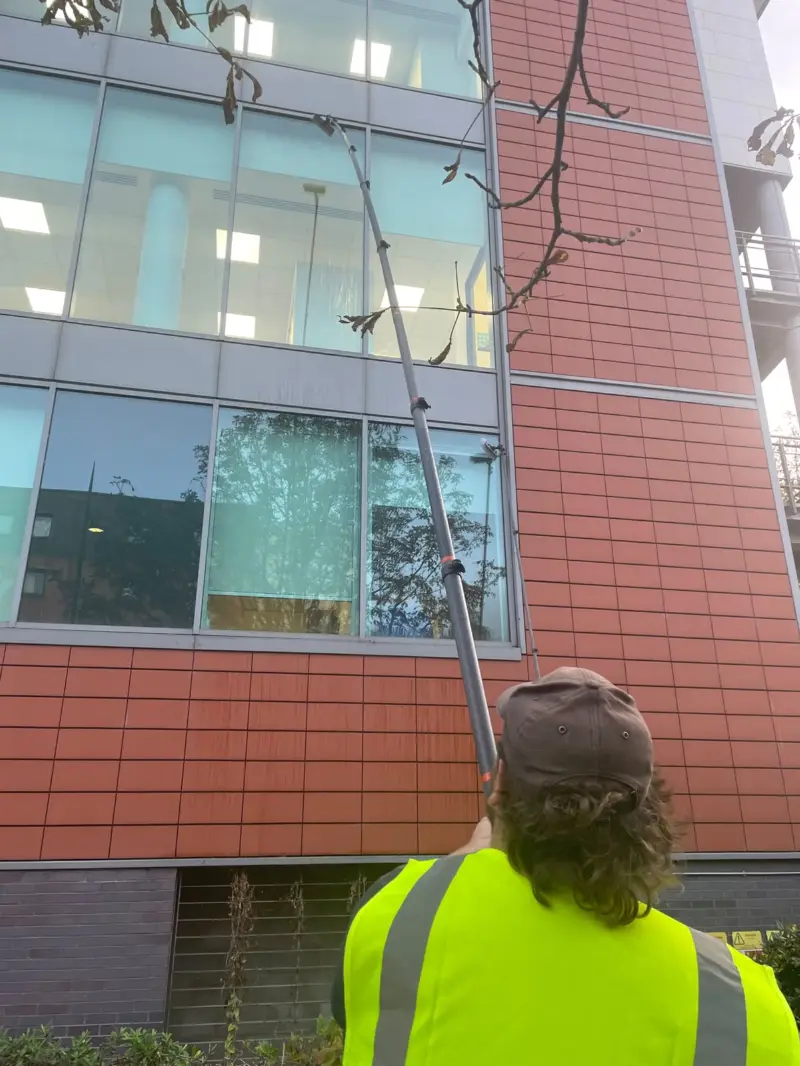
Pole systems with purified water handle most shopfronts, modern office glazing and frames at reachable heights, and the water dries without spots or a detergent film. They keep the operator at ground level and the equipment compact.
Small panes, glazing bars and older period windows often suit hand work, with a squeegee and ladder where access allows. For heritage premises, the choice is made with the building in mind, and anything that would put pressure on fragile glass or paint is ruled out. The method is chosen for each element, and the result is the same: a clean, even finish.
Frequency and timing
A busy shopfront often suits a fortnightly or monthly visit, while an office with upper-floor glazing is comfortable on a longer cycle. Premises on exposed ground or near trees may need to tighten in autumn and spring, and visitor sites may call for visits before the season starts. The survey gives a starting point and the building shows whether to adjust it.
Visits are timed to fit the business. A shop can be done before it opens, an office in a quiet slot, a school or public building at a time agreed with the staff, and a visitor attraction outside peak hours. Pedestrian routes and doorways are protected throughout, and the visit is kept compact.
Weather and the seasons on exposed ground
Hoyland's hill-spur position, and the open ground around Tankersley, mean weather arrives quickly. A bright morning can turn to driven rain by noon, and a strong south-westerly makes work at height unsafe even when the sky is dry. Pure-water cleaning copes well with showers, but not with gales or ice, and we monitor the forecast against each booking.
The seasons change what the glass needs. Low winter sun reveals every smear. Spring pollen and blossom settle on frontages, summer dust blows in off open land, and autumn leaf fall and wet pavements splash glass at low level. A standing schedule absorbs these shifts, so a frontage does not swing between spotless and tired.
Heritage glazing: what we do and what we leave alone
Old glass and old frames deserve restraint. We clean surfaces with purified water and soft brushes and nothing else: no abrasives, no solvents, no pressure on fragile panes or flaking paint. Where a pane is too delicate for a brush, we say so and agree an alternative with you or the building's custodians.
Equally, we leave alone what is not ours to touch. Stonework, lead, ironwork, signage and fixed features stay as they are, and we avoid resting anything against them. A building that has stood for two centuries needs a cleaner who works around it, not through it.
Entrances and the detail around the glass
The glass people touch sets the impression: entrance doors, side panels, low-level glazing and the push plates and frames beside them. Spray from passing traffic and fingerprints collect there, and grit settles in thresholds, sills and door tracks.
We clean the whole unit as one, because a bright pane in a grey frame still reads as neglected. A regular rota keeps entrances presentable at far less effort than recovering them after a long gap.
More than one site
A landlord or group with several addresses can have them all on one rota, with separate scopes and a named contact for changes. A route that links a Hoyland shop, a heritage unit in Elsecar and a unit on the industrial estate at Tankersley needs thought about travel and weather, and we help to arrange the order so the programme runs on time.
Neighbouring units that share a parade are usually best cleaned in one visit, which also keeps the frontage looking even.
Still reading? There is more.
10 more sections cover:
- Heritage and visitor premises in Elsecar
- High street, surgeries and schools in Wombwell
- Survey and specification
- Methods for different buildings
- Frequency and timing
- Weather and the seasons on exposed ground
- Heritage glazing: what we do and what we leave alone
- Entrances and the detail around the glass
- More than one site
- Related services for Barnsley premises