
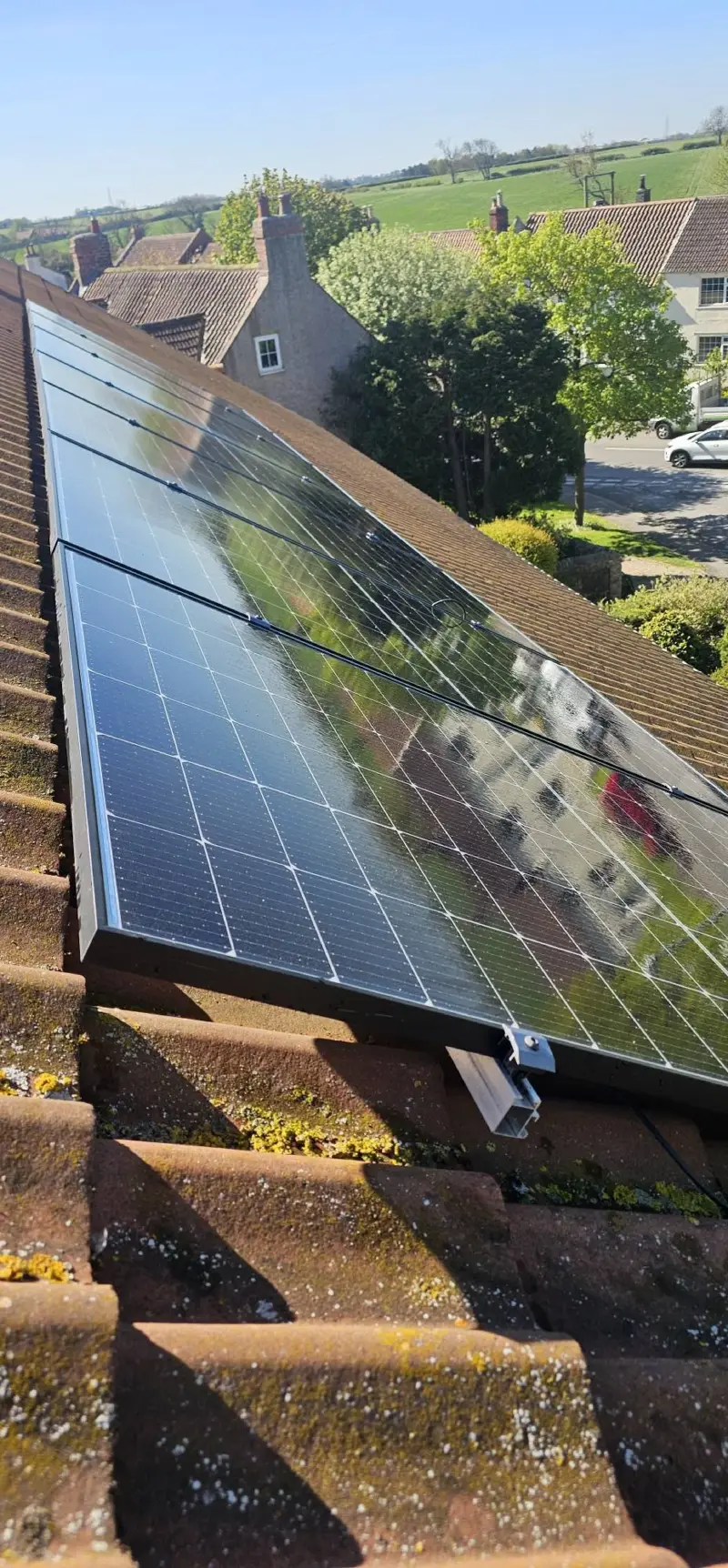
Solar panels are only as good as the light that reaches their cells, and in Sheffield plenty gets in the way. The city is hilly, wooded, wet and breezy, and the same features that make it green leave a film on whatever faces the sky. A panel on a new-build roof in Burncross has different problems from one on a hilltop home in Grenoside, a terrace in Hillsborough or a house in the Don valley at Oughtibridge, where the hillsides already shorten the winter light. This guide sets out what settles on panels across the places we cover here, how we clean them from the ground, and when a visit is worth booking.
What settles on panels in Sheffield
Panels are flat glass set at an angle, so they catch everything the air carries. Around Sheffield that means pollen and blossom from the city's many trees in spring, fine dust and grit lifted by the wind from roads, fields and building sites through summer, and leaves and seed from autumn. Rain washes some of it off, but on a shallow slope water runs slowly and leaves a dirty tide line at the bottom edge of each panel that dries and builds up.
Birds are the other constant. A ridge, a chimney or the top edge of an array is a natural perch, and droppings dry hard on glass. Moss and algae creep in from damp roof edges and the aluminium frames, particularly where roofs sit under trees or in the shade of a hillside, and they trap yet more dirt.
Where Sheffield panels sit
Arrays turn up on every kind of roof here, but they are most common on the 20th-century and newer homes of High Green, Chapeltown and Burncross, where long, plain roof slopes face open sky. Newer houses on the edges of Ecclesfield, Grenoside and Stannington often had panels fitted from new. On the Victorian terraces of Hillsborough and the old stone cottages of the villages, panels are less common and sit on smaller, steeper roofs close to neighbours.
Slope and orientation change how dirt behaves. A steep pitch sheds more than a shallow one, a south-facing panel dries in the sun while a shaded one stays damp, and an array at the top of a hill takes more wind than one in a sheltered valley. We look at where yours sits before we say how often it needs attention.
Panels in High Green, Chapeltown and Burncross
This is where we clean the most panels on this side of the city. The estates of High Green and Chapeltown have row after row of plain, uninterrupted roof slopes, and the detached homes and bungalows of Burncross often carry an array on the back roof facing the garden. Because the plots are fairly open, we can usually stand on the drive or the lawn and see the whole array before we start.
Each place leaves its own mark. High Green is up on open ground with fields on its northern side, so dust off the farmland and birds from the hedgerows are regular visitors. Chapeltown arrays near the main road and the railway pick up a finer, greyer grime. In Burncross, mature gardens mean blossom in spring and leaves lodged along the bottom edge in autumn. A visit in spring, with a second in autumn for arrays under trees, keeps all three in good order.
Panels in Ecclesfield and Grenoside
Grenoside is one of the highest villages we cover, with homes looking out over the Don valley and woodland running along one side. Height brings good light, which is why panels make sense here, but it also brings wind that drives pollen, seed and needles from the trees onto the glass. Panels nearest the woods have the most to shed, and they often show a pale, sticky film by early summer.
Ecclesfield sits lower, close to the M1, and arrays on the later estates around the old village take a fine road dust that builds up between rain showers. The stone cottages of the old core rarely carry panels, but where they do, we keep our work strictly to the glass and frames and leave the old roof alone, so there is nothing for us to disturb.
Panels in Wincobank
Wincobank faces out over the lower Don valley, with Meadowhall and the Tinsley Viaduct below it, and the view comes with a cost. Dust from the roads, the motorway and the industry along the valley floor drifts up and settles on panels as a dull grey layer that rain alone does not shift. Arrays on the post-war and newer homes on the hillside tend to show it most clearly.
The higher streets sit beneath the trees of Wincobank Wood, which crowns the hill, so seed and leaves add to the dust in autumn, and birds use the wood as a base. The small, steep roofs of the Flower Estate cottages rarely carry panels, but neighbouring houses with arrays often have a perfect view of them from the pavement, which makes our job straightforward.
Panels in Hillsborough, Stannington and Oughtibridge
In Hillsborough, arrays on terrace roofs are usually small and sit close to the next house, often on the back slope above a yard. The question is reach rather than dirt, and a water-fed pole from the yard, the back lane or the street below usually solves it. Grime from Middlewood Road and Penistone Road is the main thing we wash off.
Stannington is exposed and bright, and its panels take the full weather off the Peak District edge, including frost that lingers on the glass on winter mornings. Oughtibridge is the reverse: the valley sides already shorten the light in winter, so every bit of clear glass counts, and algae builds quickly along frames in the damp air by the river. On very steep plots in either village, we judge whether the whole array can be reached safely from below and tell you if it cannot.
How we clean panels from the ground
We use a lightweight water-fed pole with a soft brush on the end and purified water. Bristles lift the grime, bird mess and algae off the glass and the frame, then a rinse of purified water floats it all away and the panels dry clear with no wiping. Nothing is scrubbed hard, no detergent goes near the glass and nobody climbs onto the roof or kneels on the array.
On Sheffield's sloping streets we choose a spot where we can see the whole array and keep the pole steady. We agree access with you first: a side gate, a drive or a pavement, and a tap if the pole needs one. If a panel is out of safe reach from the ground, such as a high array on a tall extension at the back of a steep plot, we say so rather than improvise.
A year for panels in Sheffield
Spring is the main pollen season, and the first bright days of the year are when a dirty array is most noticeable, so many customers book then. Summer brings dust and sun-baked droppings. Autumn drops leaves and wet debris onto the lower edge, and winter, with frost, ice and short days, is the season for planning rather than cleaning.
One main visit a year, in spring, suits many Sheffield homes. Arrays under trees in Burncross or Grenoside, near fields at High Green or beneath a favourite perch can need a second visit in autumn. A monitoring app, if you have one, is a handy cue: a dip that does not match the weather is a reason to look at the glass.
Common solar panel problems we see in Sheffield
These are the things that come up most often on arrays from Chapeltown to Hillsborough:
- A line of dirt, moss or algae along the lower edge of each panel, where water sits on shallow roofs
- Bird droppings baked onto the glass beneath ridges, chimneys and aerials
- Pollen, blossom and sap from nearby trees, particularly in spring
- Fine grit and road dust on arrays close to busy routes such as Penistone Road and Middlewood Road
- Leaf litter and seeds trapped between the panels and the roof
- Nesting material and debris under panel edges, which we point out but do not remove
Combining panels with other jobs in Sheffield
The moss around an array comes from the roof, so many customers pair solar with roof cleaning in Sheffield, and clear the gutter line beneath the panels with gutter cleaning. Window cleaning finishes the job so the whole house looks cared for.
We also clean panels in Rotherham and Barnsley, and the page for exterior cleaning in Sheffield shows everything we offer in the city.
Still reading? There is more.
7 more sections cover: