
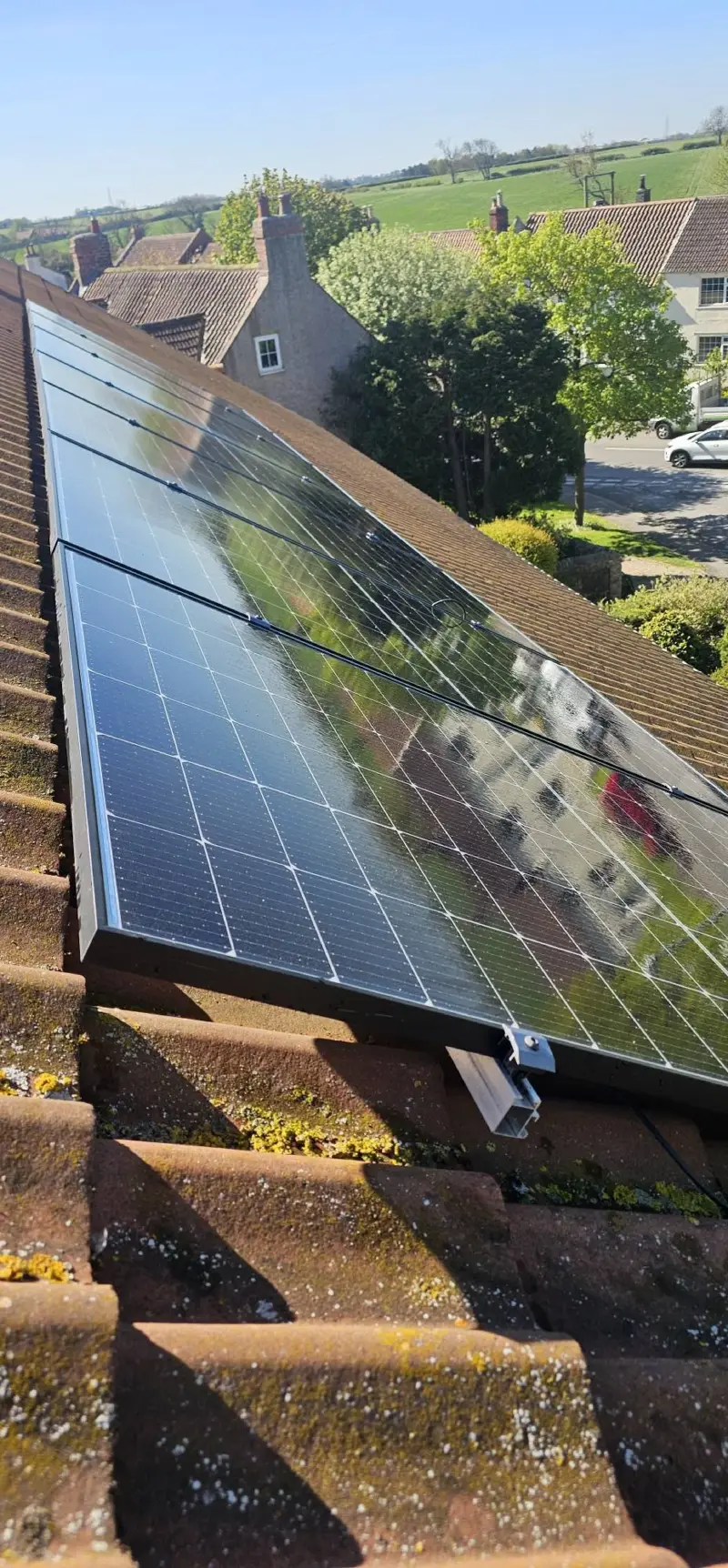
A solar array is a quiet investment, and it only works as well as the light that reaches it. Rotherham gives panels a mixed life. Around North and South Anston the sky is wide and the ground is open, so panels get plenty of sun and plenty of dust. In Wickersley and Brinsworth, low bungalow roofs and mature gardens mean shallow pitches and shade. On the hills of Kimberworth, Thorpe Hesley, Greasbrough and Scholes, trees and wind do most of the damage. Read on for what builds up on a Rotherham array, how we deal with it, and when a visit pays off.
What collects on panels around Rotherham
Panels are smooth glass tilted at the sky, so whatever drifts through the air lands on them. Spring brings pollen and blossom, summer brings dust that clings in dry spells, and autumn brings leaves, seed and the first damp that encourages moss. A shallow roof sheds none of this quickly, and the dirt gathers into a tide line along each panel's lower edge, where it dries into a crust and holds still more moisture.
Birds add a further layer. Chimneys, aerials and the top of an array are favourite perches, and droppings baked by the sun do not wash off in ordinary rain. Algae creeps in from the frame edges, and on roofs that are slow to dry, a green line follows the bottom of every panel.
Where Rotherham arrays sit
Panels appear on most kinds of roof here. The plain, sky-facing slopes of 1930s to 1950s estates in Brinsworth and Kimberworth Park are favourites with installers, and bungalows in Wickersley and Brinsworth give easy single-storey access. Newer estates in North Anston and Wickersley often had panels fitted from new. On the old stone cottages of Scholes, Greasbrough and South Anston, arrays are rarer and usually sit on the back slope.
Orientation, pitch and surroundings change how dirty a panel gets. A steep south-facing array dries fast and sheds well, while a shallow one under a tree stays damp. We look at the roof, and at what is around it, before we say how often it is worth cleaning.
Arrays in Thorpe Hesley and Scholes
Thorpe Hesley's high ground gives arrays good, open light, which is why panels make sense on its estates. The price is exposure: the wind brings dust off the fields and fine grit from the M1 at the foot of the village, and it settles as a grey layer on the glass between showers. Homes on the woodland side, near Hesley Wood, add leaf litter along the lower edge in autumn.
Scholes is quieter and leafier. A handful of arrays sit on the newer houses and the backs of older ones, often with the trees of Scholes Coppice or the Wentworth estate close by. Shade from a branch can lie across part of an array for hours, keeping that corner damp, and birds roosting in the woods use the roofs as a perch. A spring visit and an autumn tidy suit most panels here.
Arrays in Kimberworth and Greasbrough
Kimberworth Park and the streets along the ridge give a lot of long, plain roof slopes to the sky, and arrays on them run in neat lines above the gutters. The ridge takes the weather from the valley, so panels see wind-driven rain that streaks the glass rather than rinsing it, and the lower edge of each panel collects what the rain leaves behind.
Greasbrough sits against the parkland and woods of Wentworth Woodhouse, and panels there collect blossom, sap and leaf litter, with rooks and pigeons from the estate trees adding droppings. Steep gardens and sloping streets in both places decide how we reach an array. The pole works from any firm, level spot with a clear view of the panels, and anything beyond safe reach is flagged at the quote.
Arrays in Brinsworth and Wickersley
Brinsworth's semis and bungalows carry many arrays on modest, south-facing pitches, and the low roofs make access from the garden simple. Shallow angles shed water slowly, though, and the dirty band along the bottom of each panel builds faster here than on a steep roof. Homes closest to the motorway and the main roads show a greyer film than those tucked into the estates.
Wickersley has some of the most panelled roofs we visit, on large detached homes and the bungalows that fill so many of its streets. Mature gardens are the complication: conifers, fruit trees and tall hedges drop needles and blossom on low roofs and throw shade across part of an array. Where one panel is dirtier than the rest, it is usually the tree beside it, and we will tell you which.
Arrays in North Anston and South Anston
The Anstons get some of the widest skies of anywhere we work, on open ground near the Nottinghamshire border, and panels on the estates of North Anston receive plenty of light. They also catch what the wind carries across the fields: pollen, seed, and the fine pale powder that drifts from the limestone quarries south of the village.
That pale dust dries to a haze on glass, and a rain shower tends to smear it rather than rinse it away. In South Anston, homes near Anston Stones Wood add leaf litter and sap, and older limestone cottages rarely carry arrays at all. Brushing and a pure-water rinse lift the haze without scratching, and a regular visit stops it building into a crust.
Tilt, shade and why dirt stays put
The steeper a panel, the better rain does its job. Many Rotherham arrays sit on roofs with modest pitches, particularly on bungalows and extensions, so water runs slowly and drags the dirt only part way down the glass. The residue gathers at the frame, dries, and the next shower adds to it. That is why the cleanest looking panel from the street can still have a dirty bottom edge when you look closely.
Shade has its own effect. Part of an array in the shadow of a chimney, a tree or the next-door gable stays damp long after the rest has dried, and moss and algae favour exactly that corner.
How we clean an array
The equipment is simple: a reach pole fed with purified water, topped with a soft bristle head. We stand where we can see the whole array, brush each panel and its frame to lift the film, droppings and algae, then rinse so that the water carries it away. Without minerals in it, the water dries clear, and the glass is left without the spots that tap water would leave.
Nothing presses hard on the glass and no detergent is used, so there is nothing to attack coatings or seals. Nobody walks on the roof or kneels on the panels, which is the part most likely to cause damage. We agree access with you first, including side gates, dogs and tight passages, and if a particular roof is too high or too awkward for a pole, we say so before any date is booked.
The Rotherham panel year
Spring is the natural time to look at an array: the pollen has fallen, the days are lengthening and a dirty set of panels stands out. Summer dust and baked-on droppings are best dealt with before they harden into winter. Autumn sends leaves and seed, and winter is for planning rather than cleaning, because ice and frost on a roof make work unsafe.
One main visit a year, in spring, works for many homes around the town. Arrays under trees in Wickersley or Greasbrough, near the quarries at South Anston or beneath a bird perch may want a second visit in autumn. Should your system have a monitoring app, output that sags on a bright day is a prompt to check the glass.
Panel problems we meet in Rotherham
The same handful of problems appear from Kimberworth to the Anstons:
- A band of grime and green growth along the bottom of each panel, where shallow roofs hold water
- Pale quarry and field dust that rain smears and does not rinse off
- Bird droppings baked on beneath chimneys, aerials and ridges
- Blossom, needles, sap and leaf litter from garden trees and the estate woods
- Grey motorway grit on arrays near the M1
- Material wedged beneath the panel rails, which we mention to you but leave in place
Panels with other jobs in Rotherham
The moss and debris around an array come from the roof, which is why roof cleaning in Rotherham pairs well with it, and gutter cleaning clears the run beneath the panels. Window cleaning then finishes the house.
You will also find us cleaning panels in Sheffield and Barnsley. Everything we do around the town is gathered under exterior cleaning in Rotherham.
Still reading? There is more.
8 more sections cover: